Microsoft Excel Posts & Guides
Microsoft Excel or Microsoft Word: The Battle for Better Tabular Data


Previous post: Troubleshooting MS Excel Clipboard Error: “We Couldn’t Free Up Space”
This is a comprehensive blog post comparing Microsoft Excel and Microsoft Word for tabular data, adhering to all your specific formatting constraints. The accompanying image is a stylized visual representation of the comparison.
Generally a common dilemma for users involves tabular data. Which program should you choose: Microsoft Excel or Word? Each has distinct advantages for handling information in tables. However, their primary purposes differ significantly. This article will explore the best option for your needs. We will focus on computational power versus visual presentation.
Microsoft Excel: The Analytical Powerhouse

Secondly, Microsoft Excel dominates data processing. It is designed specifically for computation and analysis. The entire program revolves around cells that actively handle values. Obviously, you can input data and create complex formulas effortlessly. These formulas perform automated calculations across thousands of entries.
Nevertheless the system recalculates instantly whenever you change data. This feature provides a dynamic, live tool for budgets and models. You maintain active control over information. Sorting and filtering work with unparalleled speed. Excel makes deep analysis an efficient process. It generates dynamic charts and graphs directly from the tabular data.
Microsoft Word: The Design and Layout Champion
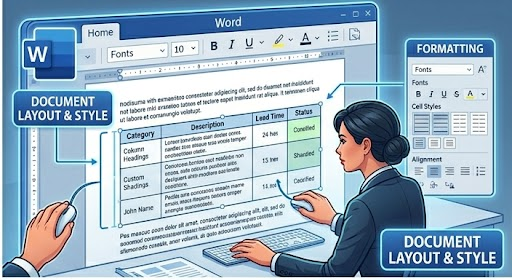
Microsoft Word serves a different function. Its tables are perfect for static information. So, when presentation is key, choose Word. The tables here look excellent within long documents. Similarly, Think about reports, proposals, and official letters. They prioritize clear structure over active calculation.
Significantly, Word offers precise control over borders, styles, and spacing. Surely, its tables blend seamlessly with descriptive text. This ensures a consistent document style.
Simultaneoulsy, Word handles complex layouts and multi-page documents perfectly. However, it lets you create clean, professional lookups for readers. Whereas, A simple list of names or key dates works best. Undoubtedly, consider Word for any table where appearance outweighs function.
| S.No. | Feature | Microsoft Excel | Microsoft Word |
| 1 | Primary Focus | Analyzes and computes complex data efficiently. | Designs and formats text-heavy documents beautifully. |
| 2 | Data Type | Handles dynamic, constantly changing numerical inputs. | Displays static, descriptive information perfectly. |
| 3 | Calculations | Executes complex formulas with live updates. | Offers very basic and limited calculation features. |
| 4 | Visual Layout | Prioritizes a rigid grid over aesthetic design. | Excels in seamless document integration and styling. |
| 5 | Charting | Generates detailed graphs directly from cell data. | Requires importing dynamic charts from other applications. |
| 6 | Best Use Case | Choose this for financial models and budgets. | For stylized reports and official proposals, choose this. |
Microsoft Excel Understanding Your Data Purpose

The deciding factor is the purpose of your data. If you need powerful mathematical processing, Excel wins. If you perform advanced analysis, pick Excel. Specifically it allows for live interactions and forecasting. Does your table contain static lists? Word works extremely well. Are you prioritizing document style over number crunching? Therefore, choose Word for reports.
Accordingly, it simplifies the look for readers. Occasionally, consider the interaction you need. Meanwhile, Live data updates require Excel. Static lookup tables thrive in Word.
Microsoft Excel vs Microsoft Word: Choosing the Right Tool
To Conclude, neither tool is “best” for all tabular data. Your specific needs define the ideal choice. Excel is essential for dynamic data manipulation. Word is superior for stylized presentation within reports. Collaborative features exist in both applications. Rather, this lets teams work together effectively.
Finally, always choose the program that supports your primary goal. Regardless, Active users save time with optimal tool selection. Presently, Plan your project before you create tables. Select Excel for depth and Word for elegance. Your productivity will improve with the right choice.
See Next Post: How to Combine First and Last Names in Excel (CONCATENATE & Ampersand Guide)